Short answer: in a busy kitchen, every week. A home cook can go months between sharpenings. A restaurant line can dull a chef's knife in a few days.
Why restaurant knives dull so fast
- Volume. One prep cook can cut more in a shift than a home cook cuts in a month.
- Cutting boards and plates. Every hit on a board rolls the edge a little. Glass, stone and ceramic surfaces are the worst.
- Shared knives. House knives get used by everyone, tossed in bins and run through the dish pit.
Honing vs. sharpening
Honing (the steel rod) pushes a rolled edge back into line. Cooks should hone often, even several times a shift. It doesn't remove metal, so it can't fix a dull edge.
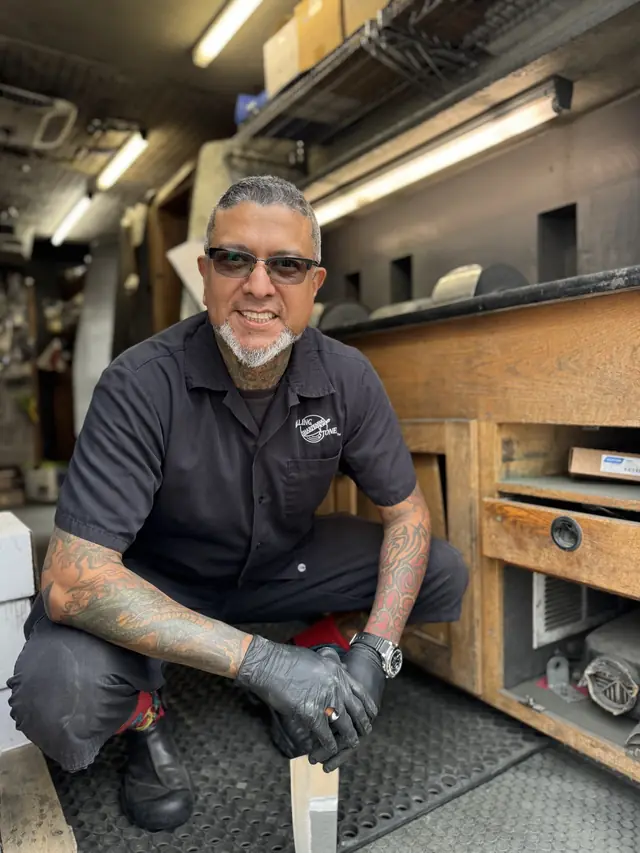
Sharpening grinds a new edge. That's what we do on the truck. Once honing stops working, the knife needs sharpening.
Signs a knife is past due
- It slides off a tomato skin or onion instead of biting in
- Cooks press down hard or saw back and forth
- It tears herbs instead of slicing them, so they bruise and turn dark
- More cuts on the line. Dull knives slip, and slips cause cuts.
A simple schedule for restaurant kitchens
| Knife | How often |
|---|---|
| Line and prep knives (chef's, paring, boning) | Every week |
| Bread and serrated knives | Every 2–4 weeks |
| Butcher knives, cleavers | Every week in a busy butcher program |
| Meat slicer blades | Every 1–3 months, depending on use |
The easy way
Our restaurant routes come to your back door every week. With knife swap service, we leave sharp knives and take the dull ones, so your line is never without blades. Get started here or call or text (214) 701-5564.